
Anatomy of a Virgo helmet
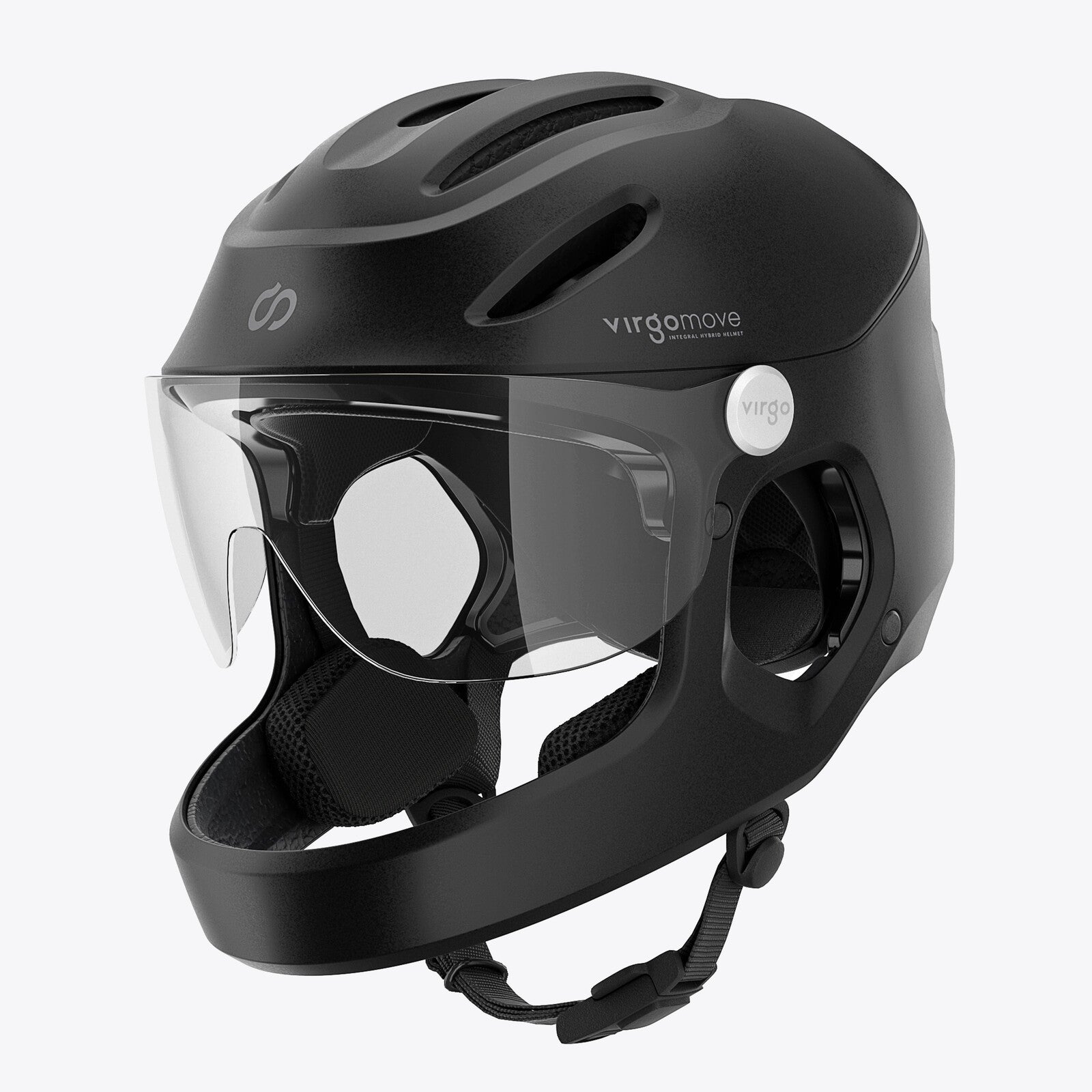
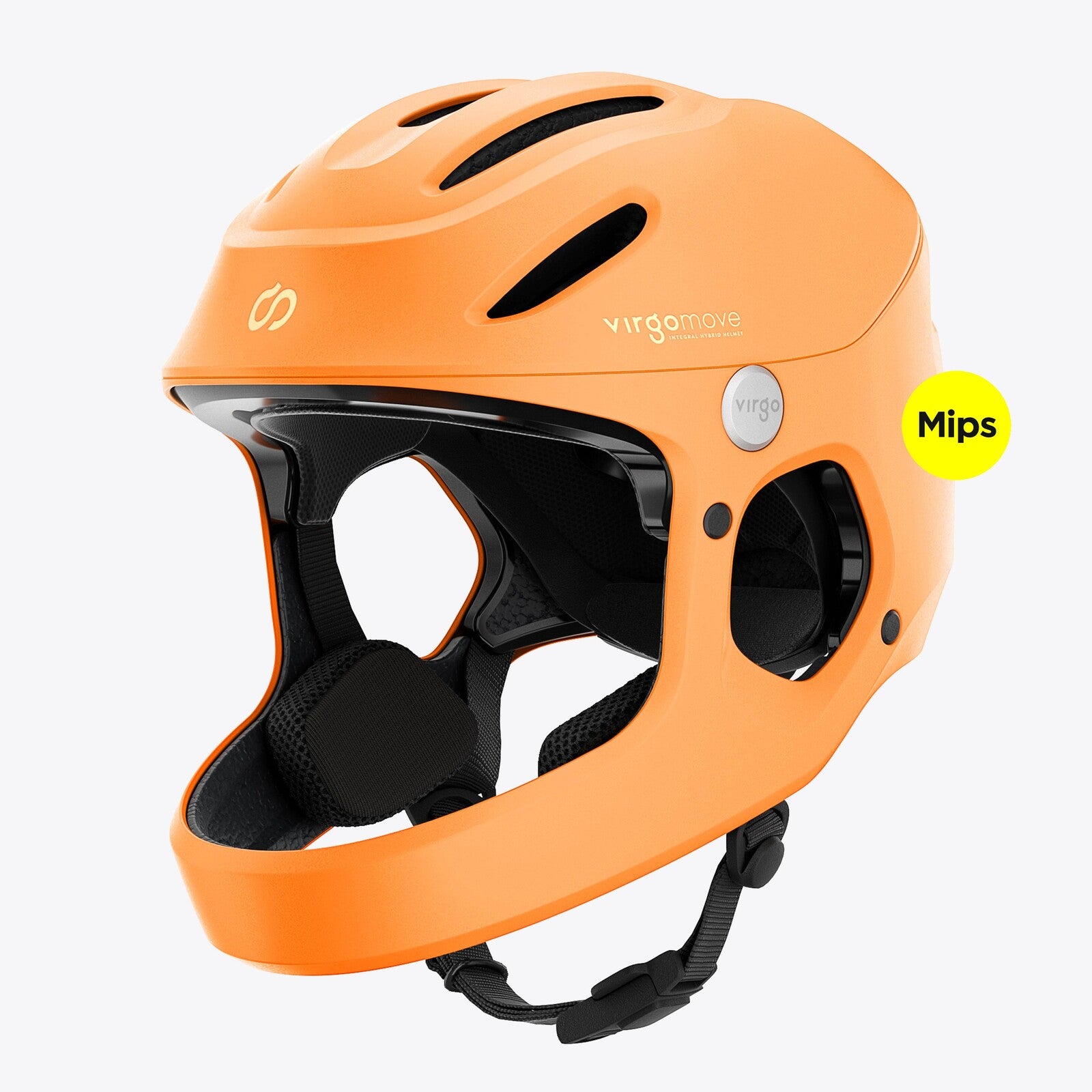
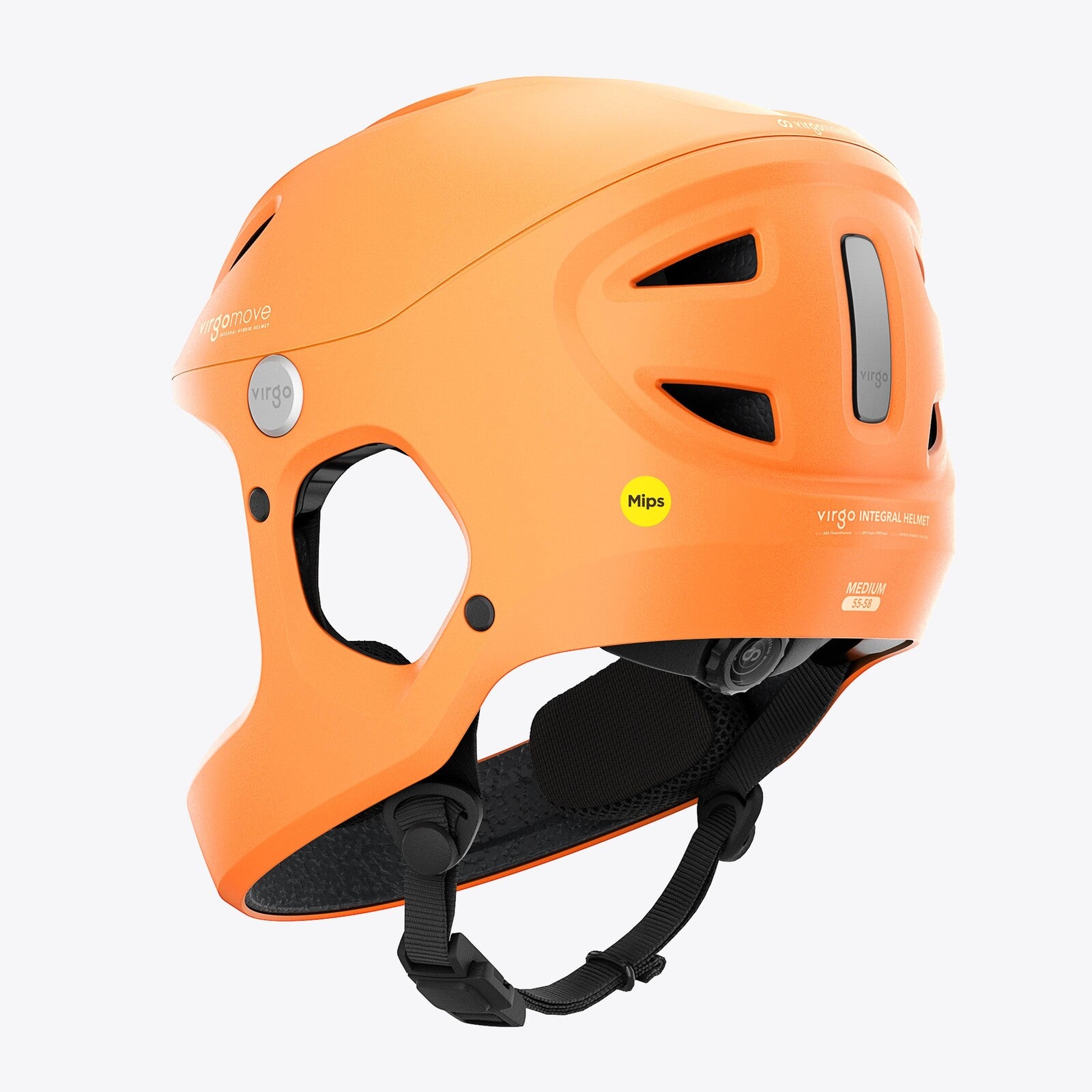
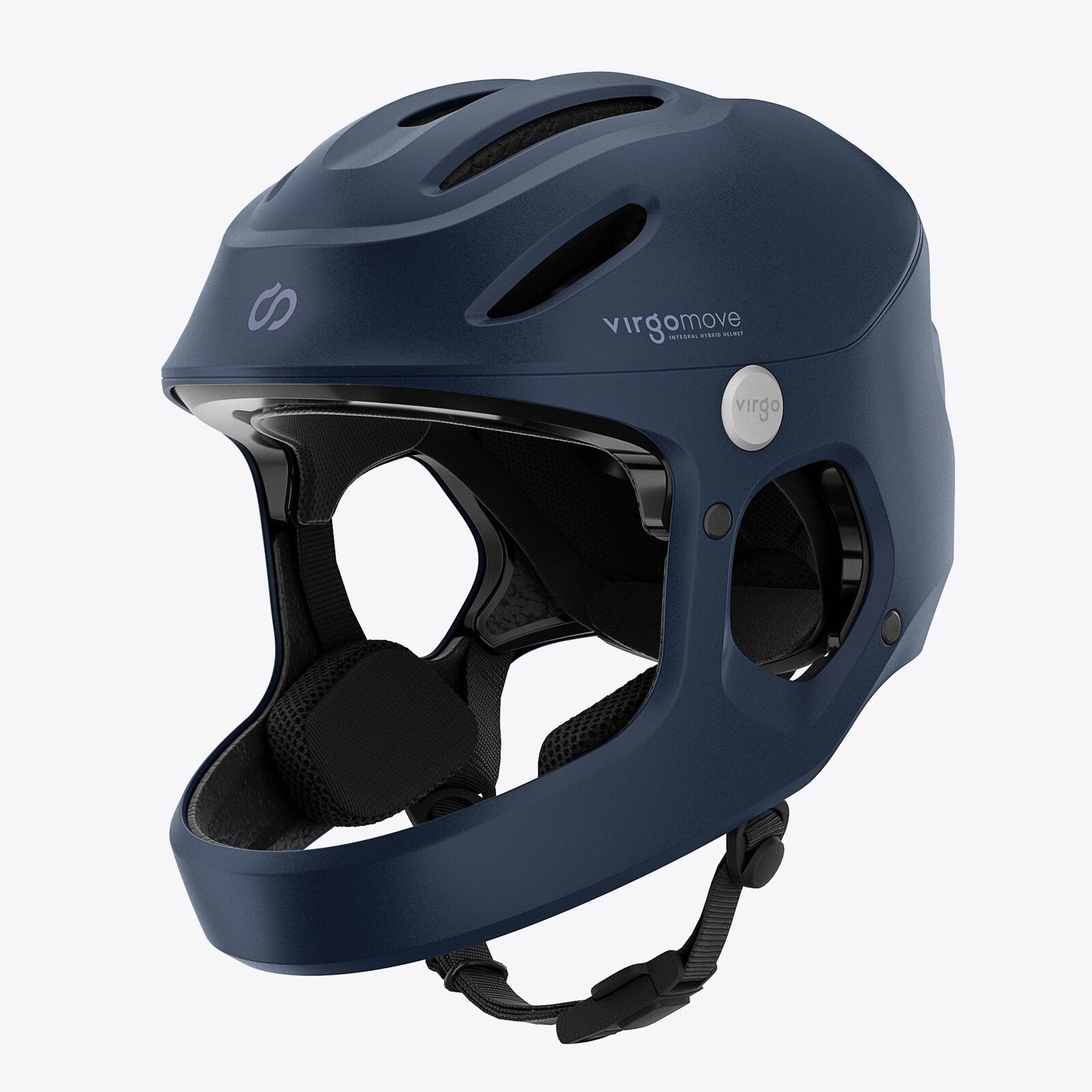
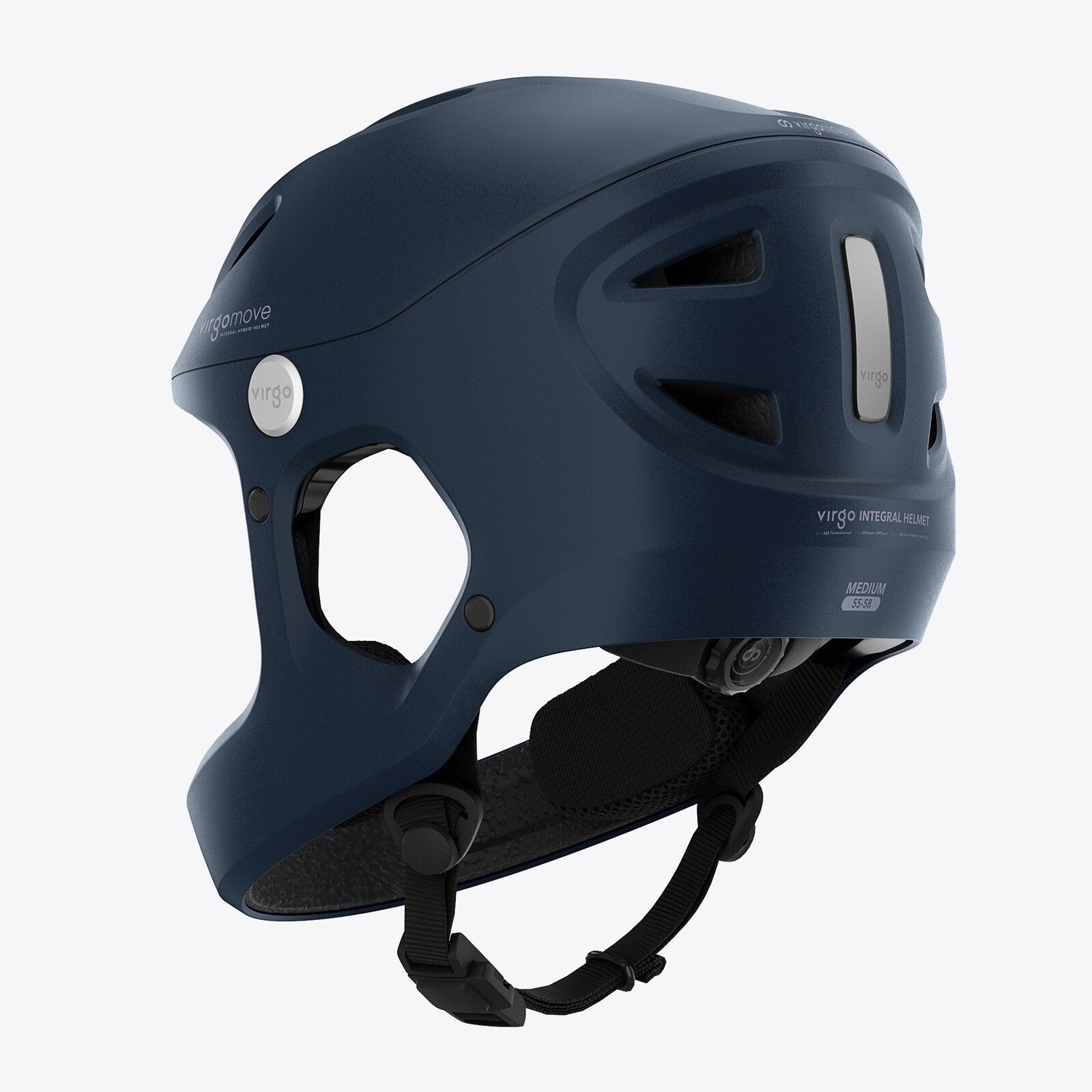
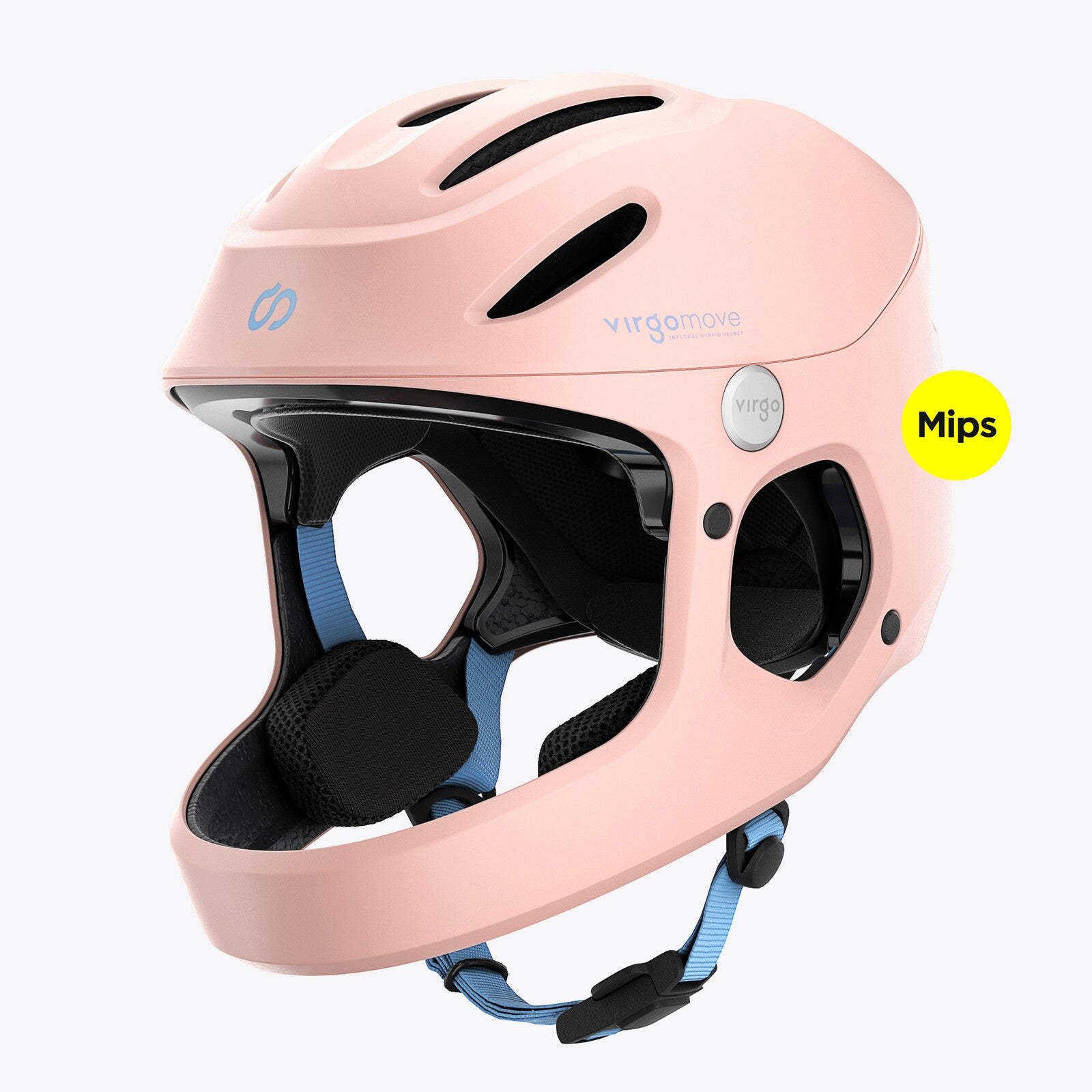
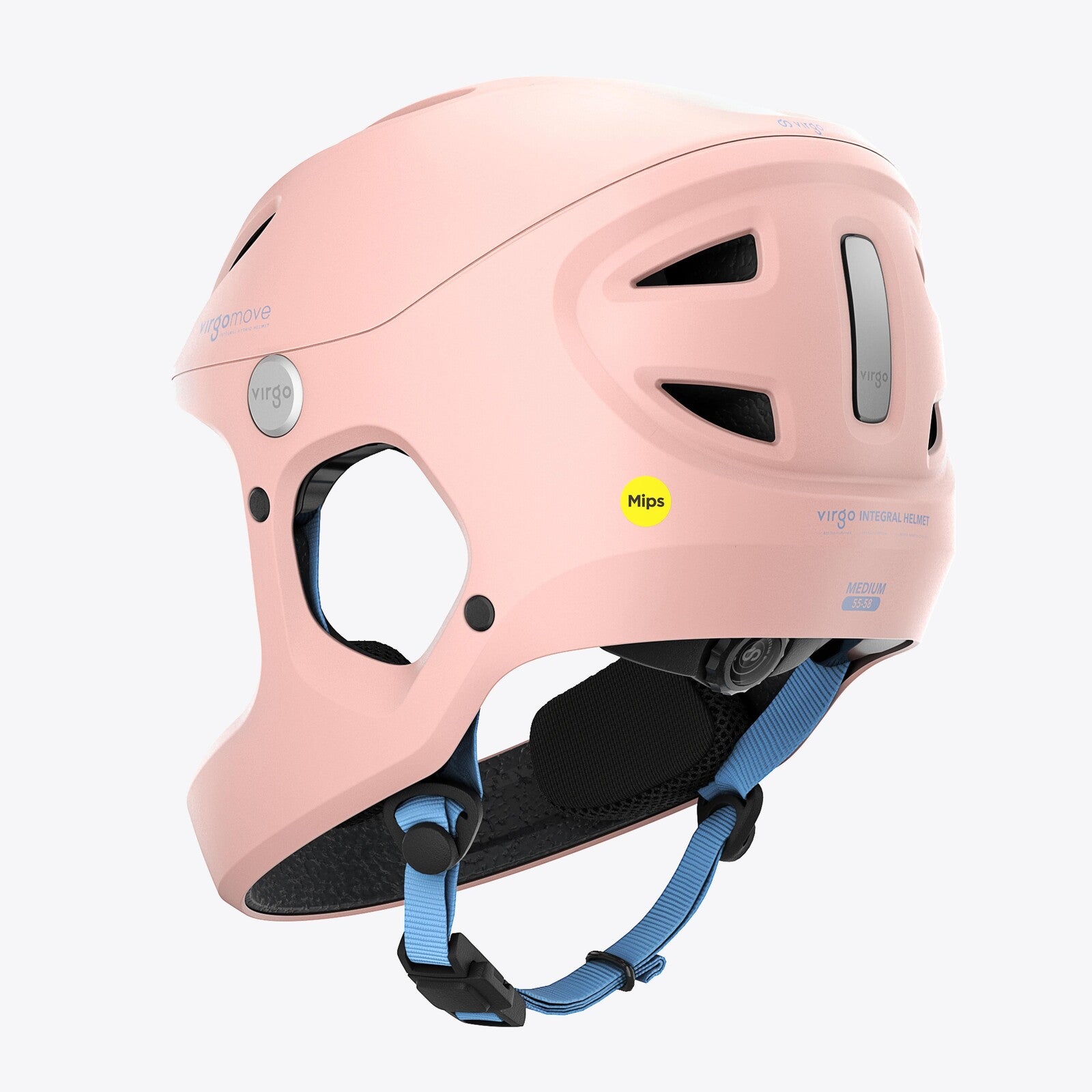
Virgo fills the void. We have merged the lightness of a bicycle helmet with the protection of a full-face helmet.
Order
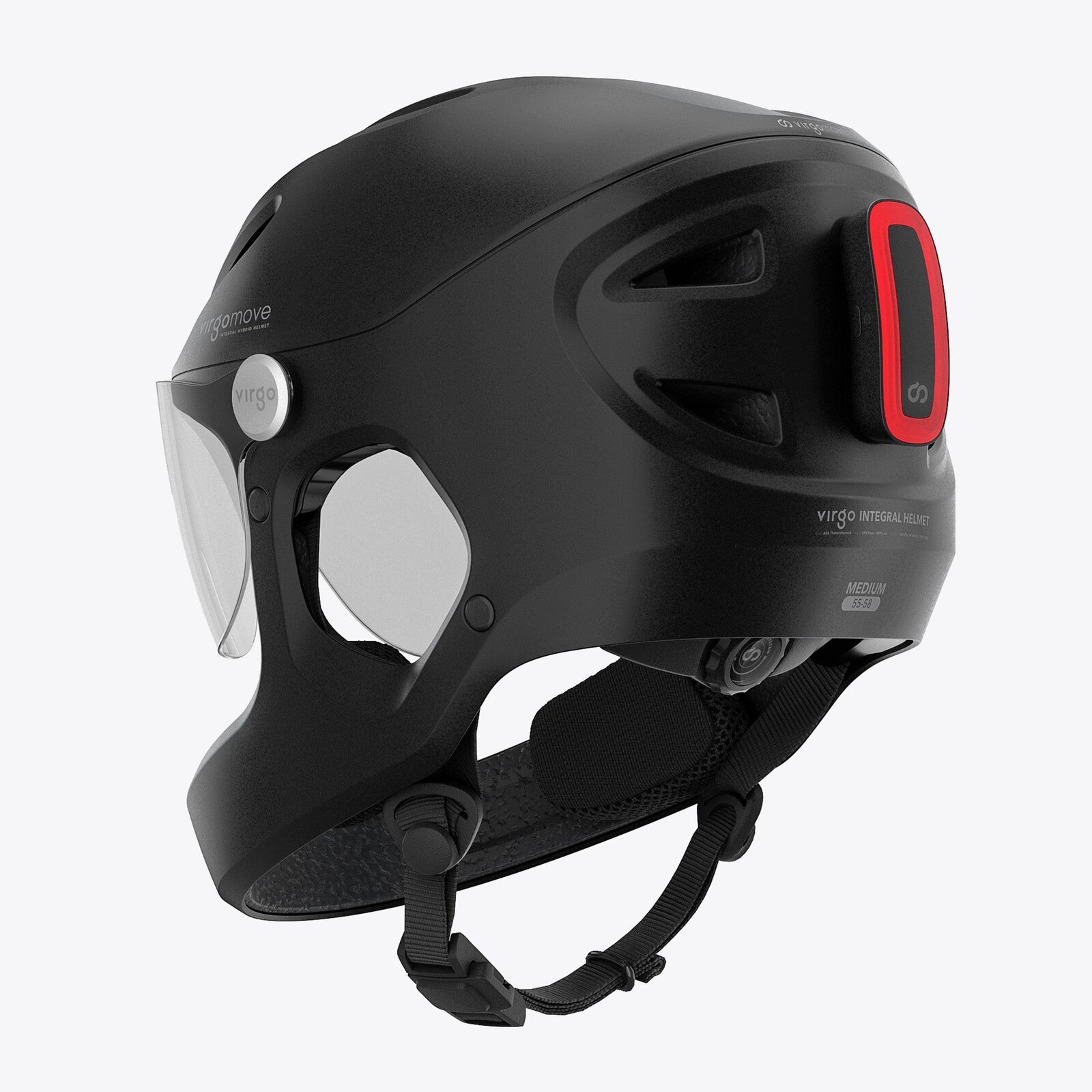
Monocoque chin guard.
Full protection for the lower part of the face
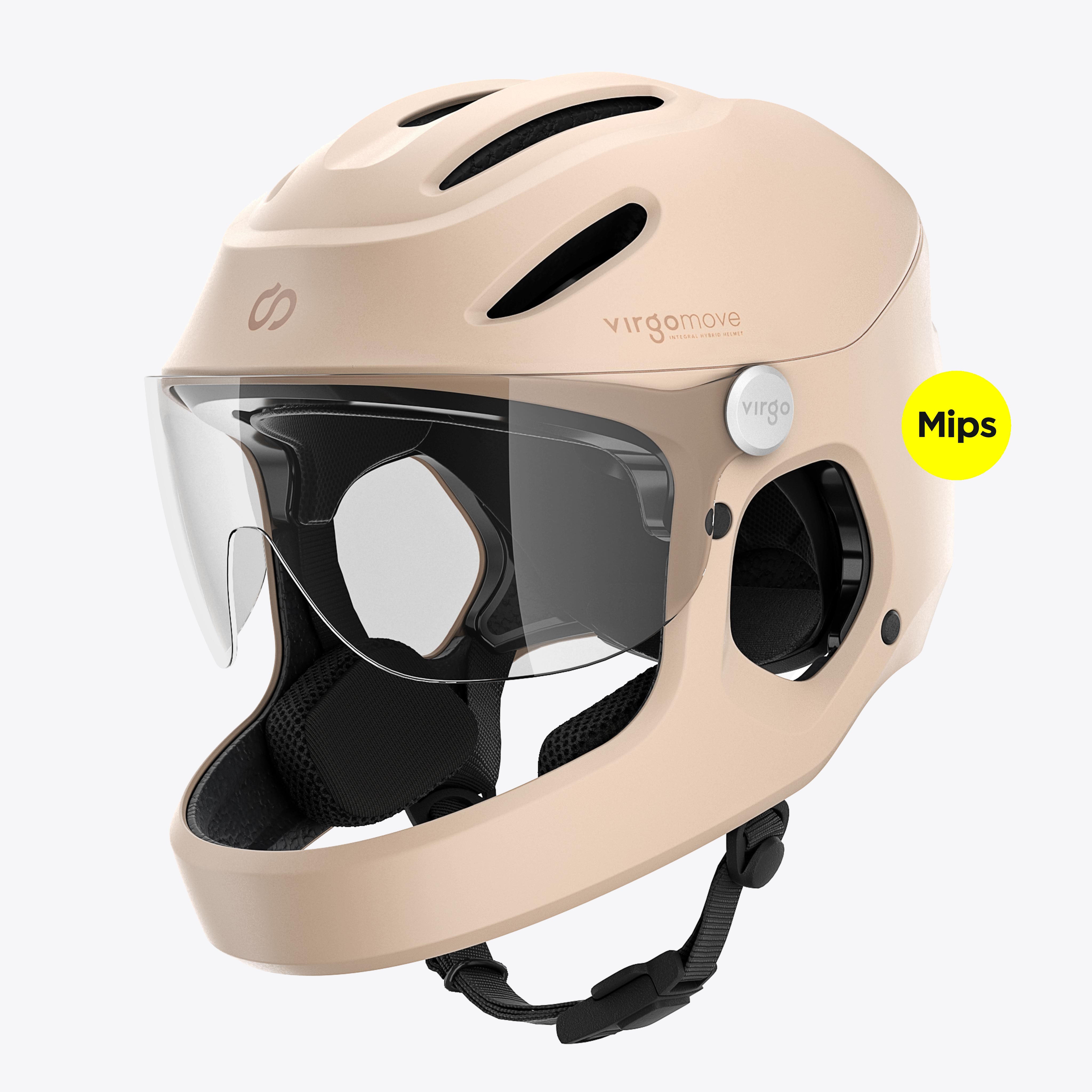
MIPS Technology
Multi-directional Impact Protection System
Optimized Ventilation
9 ventilation channels to keep your head cool, even during intense exertion.
Active Visibility.
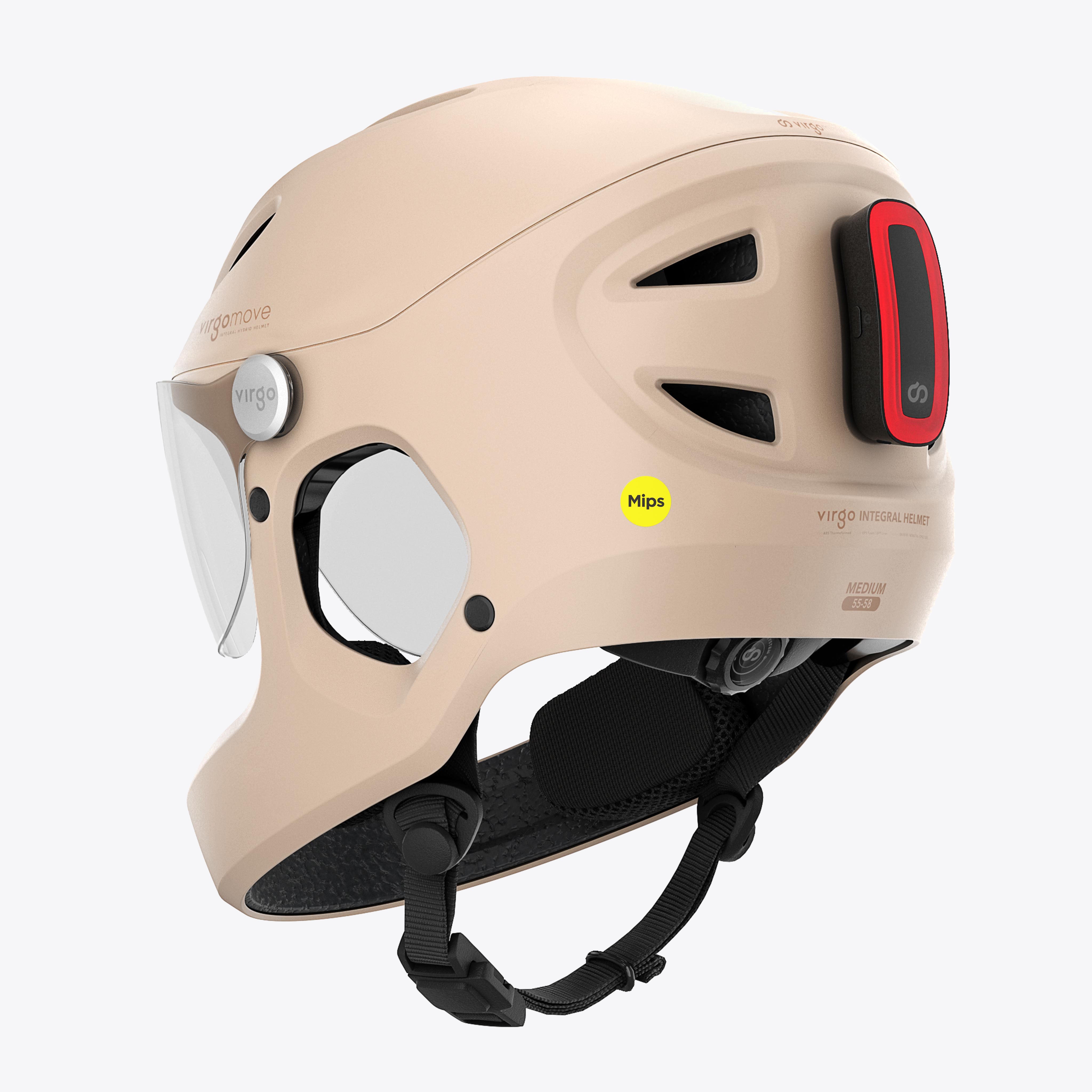
Removable LED light with integrated accelerometer and brake detection
Removable visor
Available in 4 colours: clear, smoked black, mirror blue and light yellow
How Our Full-Face Helmets Are Tested
Before reaching you, a helmet goes through a key phase: laboratory testing. All our helmets are certified and tested to guarantee head protection in all different situations.

The full-face helmet for urban mobility
Complete protection in a minimal format for those who prioritize safety over performance. The Virgo helmet is suitable for e-bikes, traditional bicycles, and e-scooters. Its design combines lightness, comfort, and protection for the rider.
Understanding our range of helmets
Discover, in full transparency, the difference between our Virgo Access and Virgo Integral helmets
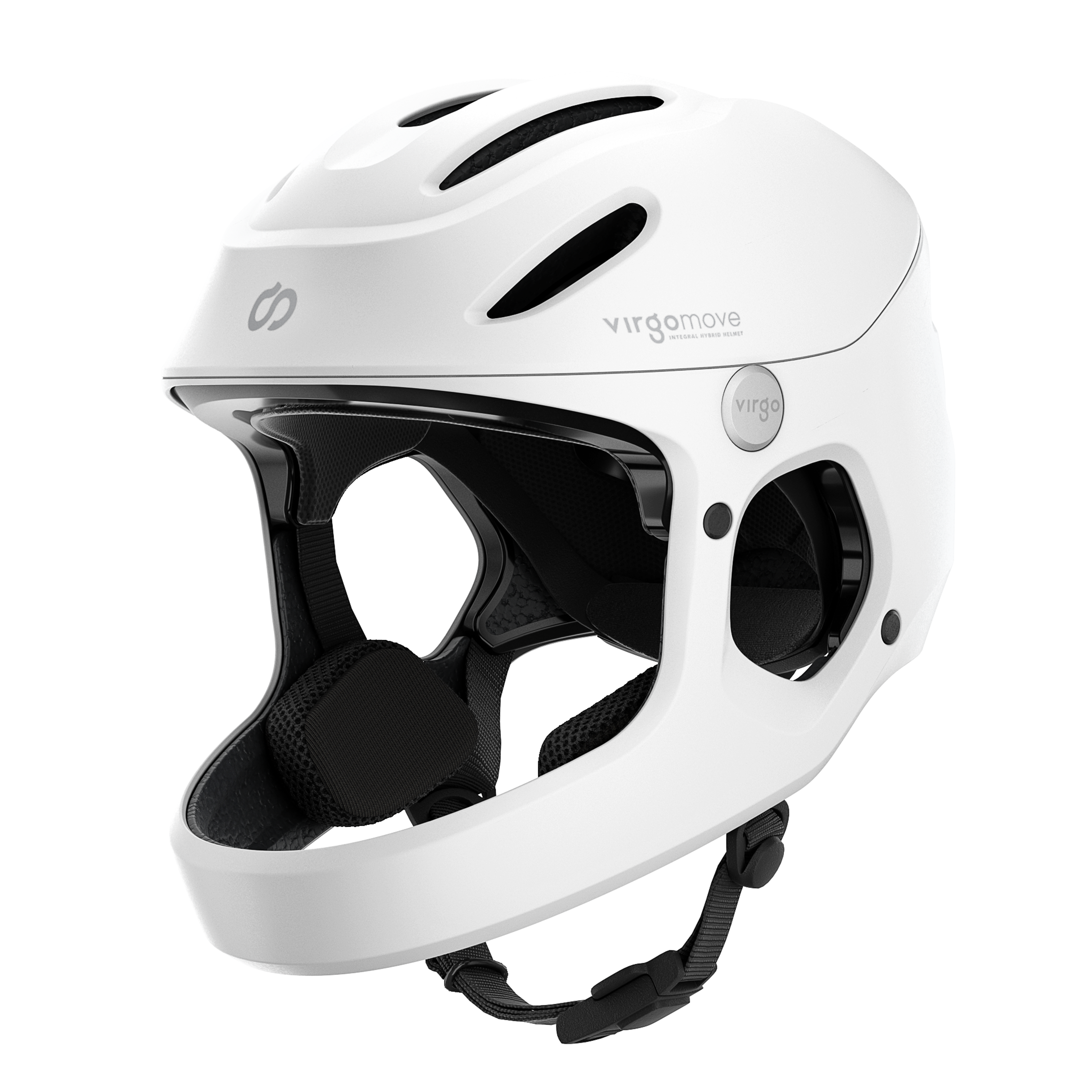
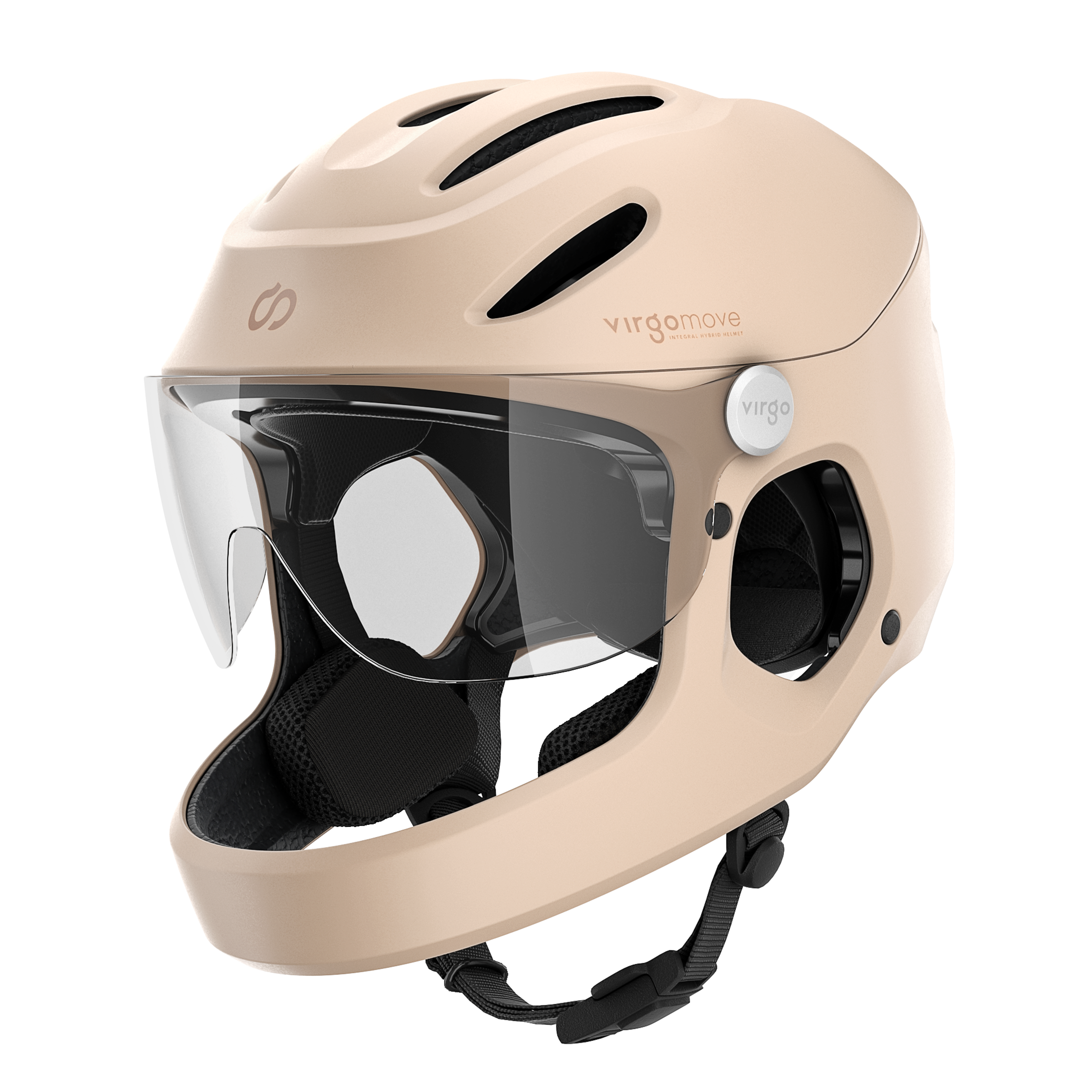
For well-protected everyday journeys
Perfect for riding in all conditions, it includes a visor and rear light to ensure visibility and allow you to ride in all weather conditions
Reinforced monocoque
Reinforced monocoque hull
Yes
Yes
Optional
Included
Optional
included
700g - 800g
750g - 850g
Available with MIPS
Available with MIPS

Virgo Kid: Because they're just as fast as you.
The same technology, adapted to the morphology of younger children. So that learning to ride a bike is nothing but a pleasure.
Our children's helmets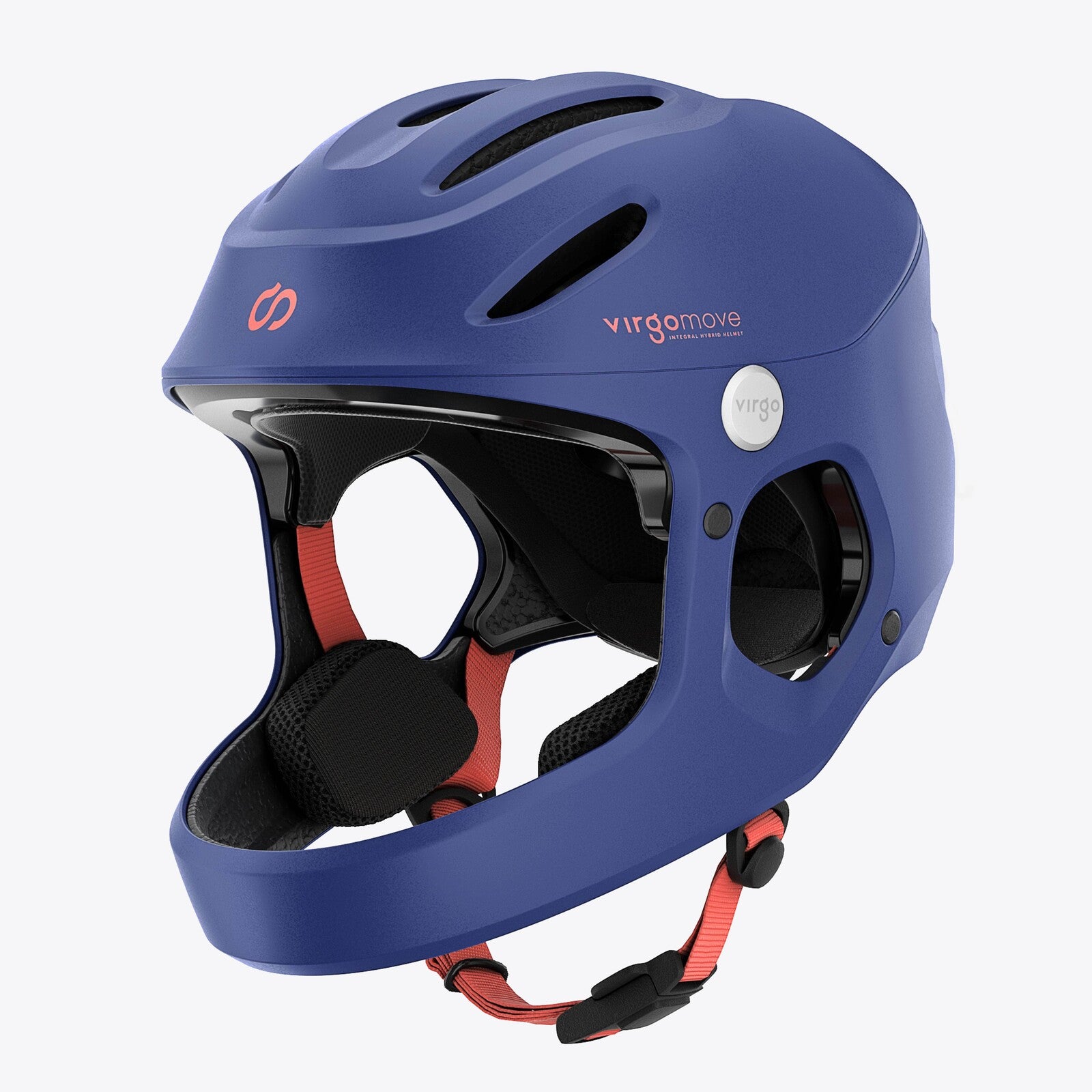
Our Distributors






Find a store
Use the map below to find the store closest to you.
Your questions, our expertise
What is the weight of the helmet?
The VIRGO helmet weighs 550-750 grams when the visor and rear light are attached.
In comparison, classic urban helmets weigh between 400 and 500 grams. As for full-face helmets used for mountain biking, their weight varies from 850 grams to over 1 kg.
The VIRGO helmet creates a new category, positioned between these two markets and offering the best of both by combining the lightness and comfort of open helmets with the complete protection of full-face helmets.
Does the VIRGO stay still on the head during travel?
As with all full-face helmets, the inertia is greater than with open-face helmets. This is why most full-face helmets use foam around the cheeks to hold the helmet in place on the head. This prevents the helmet from shaking while riding, but it makes for a bulky and stifling product.
To achieve a better compromise, we reduced the amount of foam on the sides, placing it only in two spots around the ears. This way, the head stays inside the helmet without feeling constricted. The rear adjustment system is also used to keep the back of the helmet as close as possible to the rider's head. The combination of these two features ensures a good fit while riding.
Is the VIRGO usable in hot and cold weather?
Like all cycling helmets, the VIRGO helmet feels warm when first put on. This sensation is offset by the airflow while riding. In warm weather, the helmet is designed to minimize contact areas between the head and the helmet. This allows heat to escape and air to cool the head.
In cold conditions, the helmet's wide rear section protects the head from the cold air. Additionally, a pair of removable ear protectors can be attached to the straps for extra ear protection while riding.
Is the front visor dangerous for the eyes in case of an accident?
No, the VIRGO helmet visor is made of acrylic, not glass. It doesn't break easily on impact and doesn't create micro-debris.
The front visor is made of polycarbonate. Both safety and sports glasses use polycarbonate for their lenses. Indeed, polycarbonate lenses offer the best impact protection and are safe for the eyes in the event of an impact.
What is the NTA-8776 (speed pedelec) certification?
With electric bikes, safety goes to the next level because an electric bike can more easily handle higher speeds than a traditional bike without assistance, some even reaching speeds of 45 km/h (27.9 mph) with electric assistance.
As electric bikes reach higher speeds, it is important to have a helmet designed to protect the rider against potentially greater impact forces and with wider head coverage, and that's where the NTA-8776 comes in.
An NTA-8776 helmet is a helmet that meets the requirements of the Dutch Technical Agreement (NTA) 8776. These requirements were drawn up by an international project group under the leadership of the NEN. This helmet resembles a bicycle helmet, but it protects against higher impact speeds and covers a larger area of the head. It combines a rigid ABS shell and an EPS liner for optimal impact protection all around the head.
Why put lights on a helmet?
For any cyclist, a helmet is essential, and when the nights get longer and you have to ride in the dark or in the rain, it's important to be visible. Positioned at the back of the head, this light is much more visible to motorists and cannot be obstructed by a bag or clothing.
They talked about us


Helmet legislation
There are questions surrounding the wearing of helmets while cycling. In Europe, only Finland mandates helmets for adults, and only 13 countries require them for children: Malta (up to age 10); France, Latvia, and Austria (age 12); Slovenia, Slovakia, and Sweden (age 15); Spain, Croatia, and Estonia (age 16); and the Czech Republic and Lithuania (age 18). At the European level, EU countries have committed to achieving carbon neutrality by 2050, in accordance with the Paris Agreement. This is why the development of sustainable mobility is so important.
More than just helmets
For any cyclist, a helmet is an essential item, and when the days get shorter or you're riding in the dark or rain, it's important to be visible. The helmet is equipped with a rear light to ensure visibility from all angles. This light is much more visible to motorists and cannot be obscured by a bag or clothing. The rear light has an integrated accelerometer: when it detects a significant decrease in your speed, it automatically activates the brake light at the back of the helmet. For daytime rides, this light remains powerful enough to be seen even in bright sunlight.
To ensure optimal vision in all weather conditions while maintaining a modern urban style, both women and men can use interchangeable visors: Crystal (Cat.0), Black (Cat.2), REVO Blue (Cat.2), Light Yellow (Cat.1). These visors are treated with an anti-scratch coating that repels water, dirt, and insects. Find all our visors here.
Safety standards
Constructed with a rigid ABS shell and an internal EPS liner, the helmet offers an ideal combination of protection and lightness, accompanying your efforts without compromising your safety, style, or performance. It meets major international certifications: CPSC & EN1078, as well as the new NTA-8776 standard for electric bikes, which offers enhanced protection for speed bike users. What is NTA-8776 (speed pedelec) certification? With electric bikes capable of reaching higher speeds than conventional bicycles, it's essential to have a helmet designed to absorb greater impact forces and protect a larger area of the skull. This is the main purpose of the NTA-8776 standard. An NTA-8776 helmet complies with the protocol defined in the Dutch Technical Agreement 8776. It looks like a bicycle helmet but protects against higher speeds and covers a larger area. It combines a hard ABS shell and EPS foam for optimal impact absorption all around the head. Optionally, we also offer the MIPS system, which improves shock absorption in rotational collisions.
What is the Mips system?
Mips is a safety system that enhances helmet protection in many types of accidents. In certain impacts, the Mips system can reduce harmful rotational motion that would otherwise be transmitted to the user's head. It consists of a low-friction layer installed inside the helmet. In the event of an impact, this layer can move slightly to redirect some of the forces away from the head, thereby reducing the risk of brain injury. To learn more about the Mips system, click here!
