casque · · 9 min
Helmets mandatory for e-scooters and bicycles: what the law says in 2026, in France and Europe
Since August 7, 2026, riding an electric scooter in Paris without a helmet can cost 135 euros. And the capital is far from being an isolated case: everywhere in France and across Europe, regulations are tightening. Here is a complete overview of what the law says, what could change tomorrow, and how to ride in compliance with the rules.

August 7, 2026, will remain an important date for anyone who travels by electric scooter. Since that day, riding without a helmet in Paris can cost you 135 euros. And the capital is far from an isolated case. Throughout France and Europe, regulations regarding helmet use are becoming stricter, for both scooters and bicycles.
At Virgo Move, we follow this subject very closely, and we receive questions every week from customers who are no longer really sure where they stand: is a helmet mandatory for me? What fine do I risk? Is a standard bicycle helmet enough? In this article, we provide a complete update, from national rules to local decrees, including what is being prepared in the National Assembly and by our European neighbors.
Why regulations are tightening
To understand what is happening, you have to look at the road as it is today. In just a few years, personal motorized transport devices (the well-known EDPMs: electric scooters, electric unicycles, gyropods) and electric-assist bicycles have invaded our cities. Trips are more frequent, speeds are higher, and accidents have followed the same curve.
Users of bicycles and EDPMs now represent a significant portion of those seriously injured in urban areas. However, the head remains the most vulnerable area in the event of a fall. It is this reality that is pushing local officials, prefects, and parliamentarians to act. We previously explained why current speeds change everything in terms of protection in our article on helmets adapted for new mobility.

Electric scooters: what French law says in 2026
The national rule, to begin with
At the national level, the Highway Code does not yet impose helmets in urban areas for EDPM users. It is highly recommended, but not mandatory. Be careful, however, as this basic rule is supplemented by several very real obligations:
- outside urban areas, on roads where EDPM traffic is authorized (limited to 80 km/h), a helmet and retro-reflective equipment are mandatory everywhere in France;
- the minimum age to ride an electric scooter is set at 14;
- transporting passengers is prohibited, as is riding on sidewalks.
Paris and the inner suburbs: the turning point of August 7, 2026
This is the big news of this summer. Since August 7, 2026, a prefectural decree makes wearing a helmet and retro-reflective equipment strictly mandatory at all times for electric scooter users in Paris and the three departments of the inner suburbs: Hauts-de-Seine (92), Seine-Saint-Denis (93), and Val-de-Marne (94).
Concretely, riding without a helmet in these territories now exposes you to a fixed fine of 135 euros. Day or night, weekdays or weekends.
And elsewhere in France?
Paris didn't invent this. Other departments had already issued similar decrees, and the list is growing steadily. To date, the obligation applies notably in Seine-et-Marne, the Alpes-Maritimes, the Yonne, and the Vaucluse, our home department. Cities such as Nîmes or Nice also impose helmets within their territory.
The simplest advice we can give you: before concluding that you are not affected, check the decrees in force in your department and municipality. They evolve quickly, and the "I didn't know" argument unfortunately does not work when you get a ticket.
By bicycle: what applies today
For cyclists, the national rule is more stable. Helmets are mandatory for children under 12, whether they are drivers or passengers. For adults, it remains recommended but optional, including on electric bikes as long as the assist is limited to 25 km/h.
The special case is speed pedelecs, those electric bikes that provide assistance up to 45 km/h. They are classified as mopeds, and wearing an approved helmet is already mandatory.
Towards a general obligation? What is at stake in the National Assembly
If you have the impression that this subject comes up constantly in the news, it is no coincidence. There is a real political will to generalize helmet use in France, driven by the increase in accidents related to soft mobility. Two texts are currently on the table.
Draft Law No. 1810
Filed in September 2025, it aims to make helmets strictly mandatory for all bicycle and EDPM users, including in urban areas. Bicycles, electric scooters, unicycles: everyone would be affected. If adopted, the fine for not wearing a helmet would be 135 euros.
Draft Law No. 2900
Filed in June 2026, it goes even further. It proposes making helmets and high-visibility vests mandatory everywhere, but also imposing a road safety certificate for users. The fine could climb up to 270 euros in case of an infraction.
The government's position
The debate is not just parliamentary. Marie-Pierre Vedrenne, Minister Delegate for Citizenship, recently expressed her desire to simplify current regulations, which vary by age and location, by introducing a general helmet-wearing obligation for bicycles and scooters. A recent poll actually shows that nearly 8 out of 10 French people would be in favor of it.
A divisive subject, however
We must be honest: not everyone agrees, and the arguments of the opponents deserve to be heard. For many cycling federations, the real priority should be the creation of secure infrastructure, with lanes separated from cars, which are considered more effective at saving lives in the long term. Others fear that a generalized obligation will discourage the use of self-service bikes and scooters, which are designed for spontaneous trips, going against the goals of the ecological transition.
While waiting for national law to potentially be passed, the local method prevails: more and more prefects and mayors are issuing decrees to impose helmets in their territory, as in Paris since August 2026.
And with our European neighbors?
Electric scooters: the net tightens
Faced with the increase in urban accidents, several countries now require helmets for all electric scooter users, regardless of age:
- in Italy, helmets are mandatory for all users. This hardening is accompanied by other strict measures: every scooter must be equipped with an identification plate and covered by third-party liability insurance;
- in Spain, helmets have become mandatory for everyone. Many municipalities, such as Barcelona, already apply 200-euro fines for non-compliance;
- in Denmark, wearing a helmet is strictly mandatory for all electric scooter users. The good news: a standard bicycle helmet is sufficient.
Bicycles: only two countries, but a growing trend
For bicycles, European countries remain more cautious with adults, for fear of discouraging daily use. Two countries are exceptions and require helmets at all ages: Finland, historically the only country in Europe to have made it mandatory for adults throughout its territory, and Spain, whose legislation has required helmets for all cyclists since 2025, including in urban areas.
The summary at a glance
| Country | Electric Scooter | Bicycle (adults) |
|---|---|---|
| France | Mandatory outside urban areas and in a growing number of territories (Paris, inner suburbs, Vaucluse...) | Recommended (mandatory for under 12s) |
| Italy | Mandatory for all | Recommended |
| Spain | Mandatory for all | Mandatory for all since 2025 |
| Denmark | Mandatory for all | Recommended |
| Finland | According to local regulations | Mandatory for all |
How to ride legally (and well protected) right now
Faced with these shifting regulations, the simplest strategy remains taking the initiative. A helmet worn today protects you immediately, keeps you in compliance with existing decrees, and saves you from chasing the law as announcements are made. Here is our advice for choosing well:
- choose at minimum a helmet certified EN 1078, the European standard for bicycle and EDPM helmets;
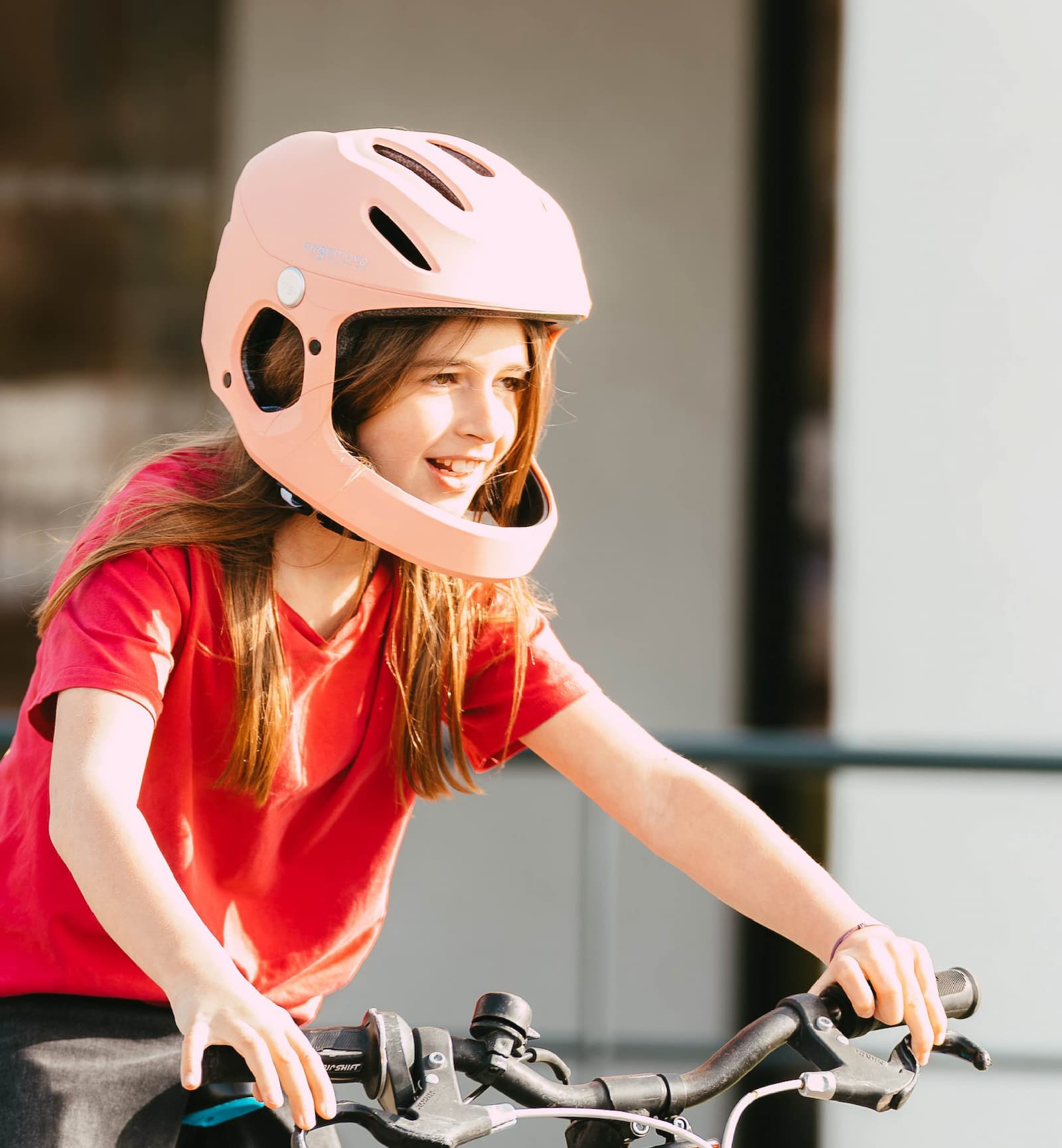
- if you ride fast or often in dense cities, a full-face helmet also protects the face and jaw, areas very exposed during urban falls;
- think about visibility: retro-reflective equipment is already mandatory in several territories, and additional lighting will never be too much;
- for children, the question does not even arise: helmets are mandatory for bicycles under 12, and we highly recommend it regardless of the activity.

This is exactly the philosophy behind our helmets. The Virgo Integral Mips Edition 2026 and the Virgo Access offer complete protection with a chin guard and visor, in a lightweight and comfortable format for daily use. For the youngest, the Virgo Kid follows the same protection logic in a format adapted for children. And to be seen from afar, our LED rear light attaches directly to the helmet.
The questions you ask us most often
Is a helmet mandatory on electric scooters in 2026?
It depends on where you are riding. It is mandatory everywhere outside urban areas, as well as in Paris, the inner suburbs, and several departments and cities that have issued decrees (Seine-et-Marne, Alpes-Maritimes, Yonne, Vaucluse, Nîmes, Nice...). Elsewhere in urban areas, it is recommended but not yet imposed.
What is the fine if I ride without a helmet where it is mandatory?
The fixed fine is 135 euros in Paris and the inner suburbs. If the draft laws currently under consideration are adopted, it could reach 270 euros under the strictest text.
Is a standard bicycle helmet enough for a scooter?
Regulation-wise, yes in most cases. But the speeds and types of falls on scooters particularly expose the face. It is for this reason that we recommend a full-face helmet with a chin guard, especially for daily city use.
Will the law change soon?
It is very likely. Two draft laws aiming for a general obligation are being studied, the government is pushing in the same direction, and public opinion is largely in favor of it. In the meantime, it is local decrees that set the law, and they are multiplying.
In conclusion: don't wait for the law to force you
The direction is clear. What was a recommendation is gradually becoming an obligation, in Paris as well as with our European neighbors. Rather than following every decree with concern, the simplest thing is to make wearing a helmet a reflex, like seatbelts in cars a few decades ago.
And if the helmet becomes a companion for all your trips, you might as well choose one you will really enjoy wearing: lightweight, well-ventilated, and protective where falls hurt. This is precisely what we strive to build at Virgo Move, trip after trip.


